Offshore Crane Training Market Projected to Reach $36.4 Billion by 2033
The offshore crane training market is projected to reach $36.4 billion by 2033, driven by offshore projects and demand for certified operators.
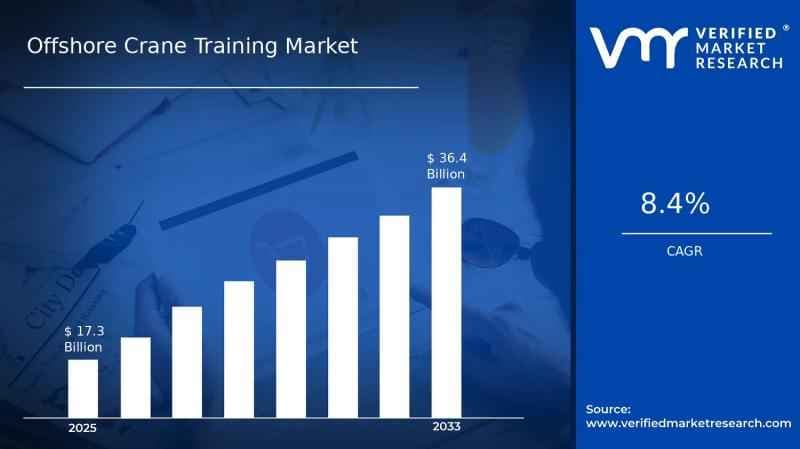
October 26, 2026 - The global offshore crane training market was valued at $17.30 billion in 2025 and is projected to reach $36.40 billion by 2033, growing at a compound annual growth rate (CAGR) of 8.4%, according to a market assessment from Verified Market Research.
The report attributes projected growth to offshore project expansion, tighter safety compliance requirements, and increasing demand for certified crane operators with practical experience. Offshore oil and gas operations, marine activities, renewable energy projects, and offshore construction all require personnel trained to operate lifting equipment in challenging marine environments.
Safety and Practical Training Drive Demand
Offshore crane operators work around heavy equipment, vessels, offshore platforms, and personnel in confined or weather-exposed locations. Training programs address load management, lifting plans, equipment capabilities, communication procedures, hazard identification, and emergency response.
According to Verified Market Research, offshore operators and project contractors are placing greater emphasis on documented training, competency assessments, and recognized certifications when assigning personnel to safety-critical activities.
Training programs combine classroom instruction, simulator-based learning, and practical field assessments. While classroom courses cover technical principles, operating procedures, and hazard awareness, simulators allow trainees to practice complex scenarios in controlled environments. On-site training provides opportunities to demonstrate equipment-handling skills and apply lifting procedures under realistic working conditions.
The report identifies on-site training as the market's dominant segment, citing the importance of practical learning and field verification.
Offshore Energy Projects Present Growth Opportunities
Expansion in offshore oil and gas infrastructure, marine logistics, offshore construction, and renewable energy is contributing to demand for specialized crane training.
Offshore wind projects create lifting requirements associated with equipment installation, maintenance, and servicing. Oil and gas infrastructure development also requires qualified crane operators to support equipment handling and other offshore activities.
The report identifies simulator-based training as another area of market development. Simulations can expose trainees to scenarios involving challenging weather conditions, equipment malfunctions, and complex lifting sequences without requiring every exercise to take place in an active offshore environment.
Training programs also vary by competency level. Basic, intermediate, and advanced certifications provide different learning pathways based on workers' experience, responsibilities, and applicable qualification requirements.
Standardized training frameworks and recognized credentials may also help employers evaluate workforce competency across projects and locations, subject to employer, regulatory, and project-specific requirements.
Market Segments and Competitive Landscape
Verified Market Research segments the offshore crane training market by training type, certification type, and end-user industry.
Training types include simulator-based training, classroom training, and on-site training. Certification categories include basic, intermediate, and advanced training. The report identifies oil and gas, marine, renewable energy, and construction as the four end-user industries.
The competitive landscape includes training organizations, certification bodies, and specialized providers. The report identifies training quality, practical assessment capabilities, industry recognition, program coverage, and alignment with offshore operating requirements as factors influencing competition.
OPITO is identified in the report as a market leader, supported by its established safety training frameworks and broad recognition of offshore credentials.
North America Accounts for 42% of the Market
North America accounts for approximately 42% of the offshore crane training market, according to Verified Market Research. The report attributes the region's market position to its extensive offshore oil and gas operations and the resulting demand for qualified personnel.
Offshore contractors, energy operators, and service providers also contribute to regional training demand. Requirements vary according to project activity, workforce needs, safety policies, and the competency standards applied by employers and other relevant organizations.
The report assesses five geographic regions and considers differences in offshore project development and regional energy industries.
Offshore Crane Training Market Outlook Through 2033
Verified Market Research projects the offshore crane training market will grow from $17.30 billion in 2025 to $36.40 billion by 2033, representing a CAGR of 8.4% over the forecast period.
The report identifies offshore project development, safety compliance requirements, and demand for qualified operators as key factors shaping the market. On-site training is expected to remain important, while classroom instruction and simulator-based learning will continue to support technical preparation and practical competency development.
The findings are based on Verified Market Research's assessment of the offshore crane training market.