
Best Practices
Every lift begins long before the hook ever leaves the ground
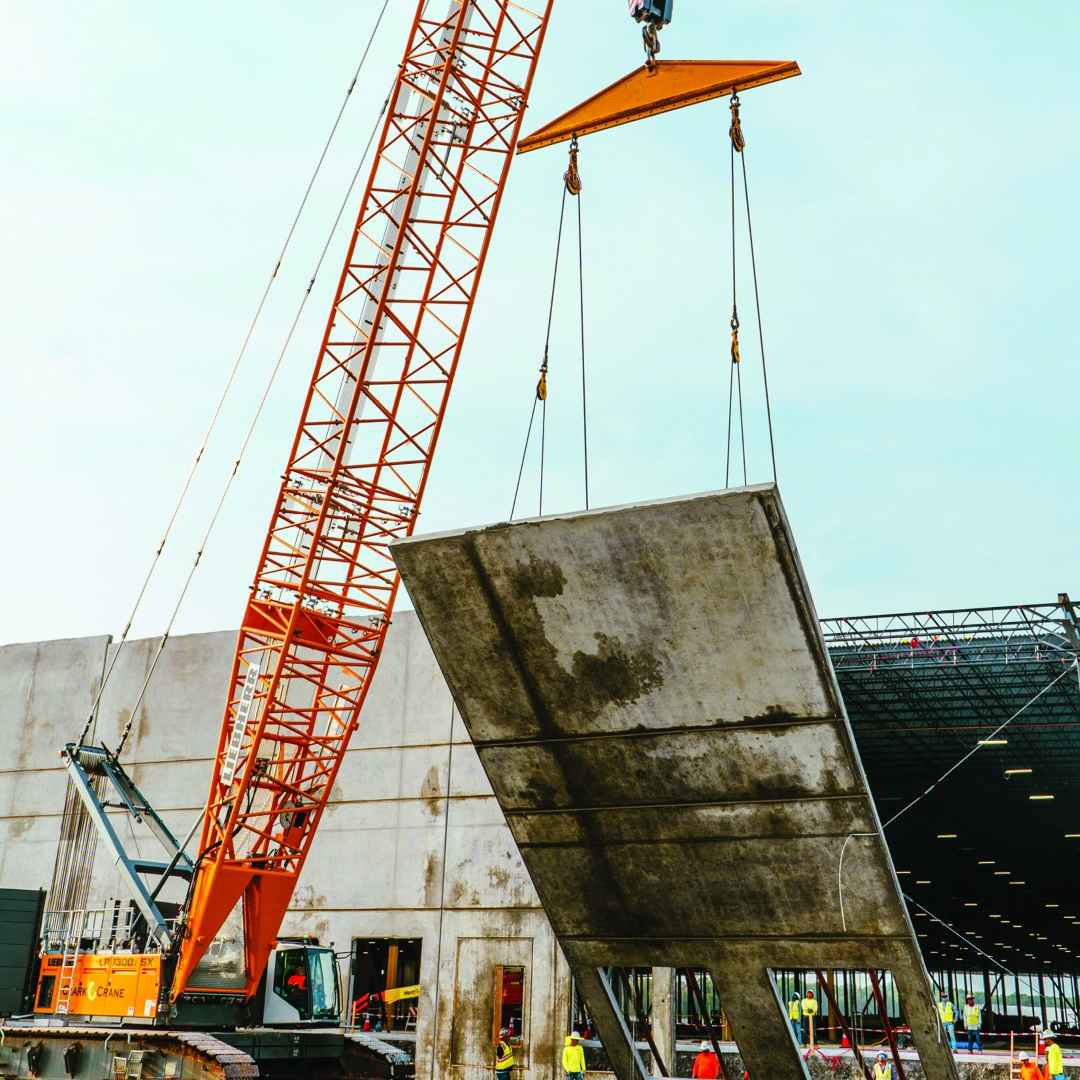
Crane operations succeed when planning and rigging best practices are the backbone of safe lifts and successful projects. Effective rigging plans reduce risk, improve efficiency and safeguard equipment and crews.
This article provides a comprehensive guide for crane operators and rigging teams, based on practical techniques and standards from leading lifting and rigging organizations.
1
Start with a Detailed Pre-Lift Assessment
Associated Wire Rope & Rigging notes that a thorough pre-lift assessment prevents miscalculations that often cause shifting loads or side loading of slings and hooks. Before putting a sling on a load, the team must understand the entire lift scenario by:
- Determining weight, center of gravity and dimensions.
- Identifying pick points and restrictions (e.g., awkward shapes, protrusions).
- Confirming if the load is balanced or requires load adjustments.
2
Choose the Right Gear and Hardware
Kito Crosby emphasizes that hardware ratings and compatibility must align with both the load and the crane’s capacity. Selecting the correct rigging hardware involves:
- Choosing slings (wire rope, chain, synthetic) rated above working load limits.
- Ensuring components like shackles, hooks and blocks are certified and inspected.
- Considering abrasion resistance, temperature limits and environmental conditions.
3
Know the Working Load Limit
Modulift reminds operators that every rigging component carries a Working Load Limit (WLL). To account for dynamic load swings, angle loading and unforeseen stresses:
- Never exceed WLL.
- Apply industry safety factors (typically 5:1 or higher depending on application).
- Use slings that are tagged and traceable to service records.
4
Consider Sling Angles and Load Geometry
Tandemloc highlights that incorrect sling angles can cause catastrophic overloading even when lifting below rated weight. Good rigging plans model these angles before lift execution:
- As sling angle decreases (moves away from vertical), tension increases.
- Slings at 60° may double stress compared to vertical lifts.
5
Inspect All Rigging Gear Before Use
Greenfield relates that only visual and hands-on inspections can detect worn gear. Rigging gear must be inspected before every lift to:
- Look for frays, kinks, broken wires, corrosion, deformation and heat damage.
- Check sling end fittings, hooks and attachments for cracks or wear.
6
Use Proper Taglines and Control Lines
Mazzella points out that controlling the load during movement is critical for reducing unintended motion and to provide for precise control. Taglines are especially valuable in windy conditions or confined spaces to:
- Prevent load spin or rotation.
- Keep personnel clear of the load’s swing path.
7
Communication
LGH emphasizes communication as a core risk mitigation step. Best practices include:
- Using standardized hand signals or dedicated radio channels.
- Ensuring all crew members understand signals before a lift begins.
8
Certifications
I&I/Slingmax underscores that professionals trained in rigging principles reduce guesswork and enhance safety. To ensure qualifications:
- Rigging personnel should be trained and certified according to industry standards.
- Complex lifts may require advanced rigging certifications.
9
Rigging Plans
Liftex notes that written plans standardize procedures across teams and provide for clarity and accountability. Rigging plans should include:
- Load weight and center of gravity location.
- Sling types, angles and configurations.
- Step-by-step lift sequence.
- Contingencies for environmental or site changes.
10
Site Conditions
Lift-It Manufacturing stresses that even perfectly rigged loads can become hazardous if site conditions shift. Jobsite variables to consider include:
- Ground conditions and crane stability.
- Wind speeds and weather changes.
- Overhead obstructions (power lines, beams).
11
Pre-Lift Briefings
LIFTPRO International recommends pre-lift briefings as essential for aligning crew understanding. Briefing elements should encompass:
- Reviewing lift plans with all crew members.
- Clarifying roles, responsibilities and stop signals.
- Establishing emergency response steps.
12
During the Lift
Multiple sources agree that a lift plan is not static because dynamic conditions require adaptation. During the lift:
- Stop if the load shifts unexpectedly.
- Re-evaluate sling angles or pick points.
- Respond to mechanical cues (grinding, resistance).
13
Post-Lift Review
After the lift, analyze performance in a review that should include:
- What worked and what didn’t.
- Any discrepancies from plan.
- Documentation for future reference.
In crane operations, rigging is more than a checklist — it’s a discipline combining engineering knowledge, meticulous preparation and effective execution. Best practices protect personnel, safeguard equipment and preserve project timelines.
Companies that embrace these rigorous approaches not only reduce risk but also enhance operational efficiency, strengthen their reputation for excellence and protect the bottom line.