Behind the Flashing Lights
An essential heavy-haul service adapts to changing regulations, technology and industry pressures
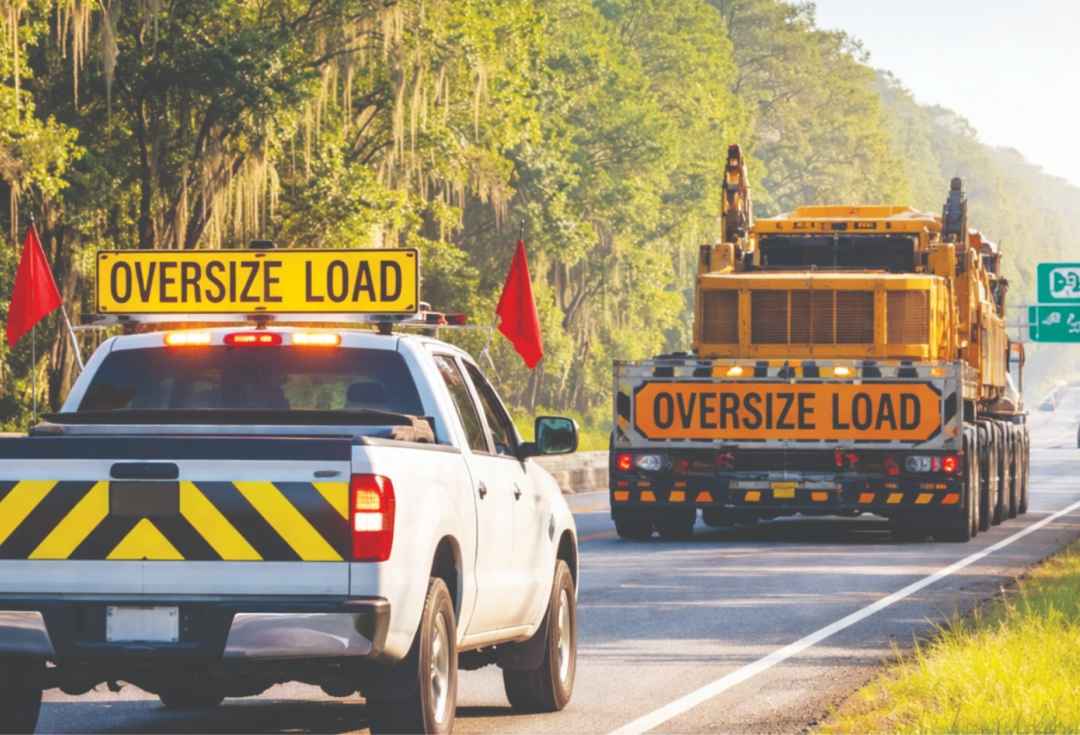
It’s easy to see the flashing lights of an oversized transport ahead and simply think, “traffic delay.” However, these lights represent an industry responsible for guiding some of the largest and heaviest loads in North America, all while protecting motorists and infrastructure. Pilot car operations sit squarely between transportation, public safety and logistics, but still remain fragmented and misunderstood.
When infrastructure and construction projects grow, their freight demands increase, and oversized loads become bigger and more complex, all while the pilot car industry is already grappling with inconsistent regulations, workforce shortages, insurance pressures, safety scrutiny and demand for professionalism and public education. Often overlooked, it is an industry in the midst of modernization.
Without a Rulebook
One of the most prominent challenges facing the pilot car industry is the variety of state regulations, especially between neighboring states. For example, a transport traveling from Idaho, which requires no certification and escort vehicles only for loads exceeding a certain size, will face very different regulations in Oregon, which requires three escort vehicles and operator certification.
“Rules, regulations and requirements for safety are very different in Manhattan than they are in Montana,” noted Nick Ruscito-Caissy, president and CEO of ODS North America and chairman of the Specialized Carriers & Rigging Association (SC&RA) Pilot Car Committee. “So, the idea that you’ll have the same regulations in Manhattan and Montana, I think, is an unrealistic expectation.”
The National Pilot Car Association (NPCA) offers a state regulations database that provides details on certifications, equipment and compliance requirements for pilot car operators. At the same time, efforts to improve consistency across jurisdictions are also underway. Instead of pursuing a one-size-fits-all approach, some states are working to align portions of their requirements with neighboring jurisdictions to improve reciprocity and make it easier for certified operators to work across state lines.
Maryland recently adopted a pilot/escort vehicle operator certification program, using surrounding states, such as Virginia, as a framework. The approach creates greater consistency throughout the region while allowing each state to address its unique transportation and infrastructure needs.
Some states and provinces also require police escorts for certain oversized loads. However, limited law enforcement availability and permit timing can leave transports waiting at state lines for an escort, resulting in costly delays and downtime.
In response, some jurisdictions are shifting toward certified civilian escorts for superloads. Pennsylvania became the first state to offer carriers a choice between a police escort and a certified escort vehicle (CEV). In Ontario, police escorts have been eliminated entirely and replaced by certified superload escorts (CSE). Quebec is expected to implement a similar program in 2027.
Michelle Kind, president/executive director of Evergreen Safety Council, suggested that, “Standardization, or harmonization, has been a big focus in the industry, and while there is a long way to go, we’ve seen some progress. Having greater consistency in pilot car standards between all 50 states would improve safety and make enforcement of those standards easier.”
Yet, complete national standardization seems unlikely. Population density, bridge clearances, traffic volumes, roadway design and weather conditions can all influence how a state regulates. Instead, the goal isn’t identical regulations but improved consistency where possible.
Push for Professionalization
A part of the consistency conversation is pilot car operator certification. Only about a third of the 50 U.S. states require some form of pilot/escort certification, and even then, requirements can vary. There is some traction, however, as more states start implementing requirements.
“We’re seeing more and more states adopt certification programs,” said Ruscito-Caissy. “The SC&RA and the pilot car committees also push for reciprocity there. We’re even reaching out to states to tell them, ‘You don’t even have to develop your own program. They exist out there. You just need to adopt it and enforce it.’”
Industry organizations say the benefits extend well beyond compliance. The NPCA notes that certification can open doors to more opportunities while providing legal protection, increased earning potential, professional credibility, reduced liability and insurance benefits.
Certification is available through some programs, such as USPilotCar.com, offering on-site or online courses; Evergreen Safety Council, offering Washington State pilot escort vehicle operator (PEVO) training, wind industry transportation professional advanced certification (WITPAC) certification and instructor training; or the Hill College Heavy Haul Program, which offers P/EVO, steermen and route surveyor training.
The growing emphasis on certification reflects a broader shift in how the profession is viewed. Pilot car operators aren’t just drivers with warning lights; they are also increasingly expected to be highly trained professionals not only responsible for the transport of loads but also for the safety of themselves and others on the roads.
Chris Smith, VP of transportation with SC&RA, added, “Pilot cars aren’t an accessory to the load — they’re an essential public safety provider. Uniform certification standards are how we can make sure that system works the same in every state a specialized load or vehicle crosses.”
Having a cohesive certification standard not only makes it easier for loads to cross different states, but it also creates a central safety pillar that is critical to the industry. “The risks are increased for everyone when safety standards are lacking or inconsistent,” Kind pointed out, “especially on very large loads, which come with a high risk factor.”
Insurance and Liability Pressure
The growing emphasis on training and professionalism is also reshaping how operators approach risk. From securing adequate insurance coverage to clearly defining responsibilities before a move begins, managing liability has become an increasingly important part of the profession.
There are only a handful of insurance companies that will actively insure the industry, and costs are going up. Ten years ago, there were about 10 different providers that companies could turn to for protecting their equipment, and today, there may be only two or three. The requirements for liability insurance also differ by state and location. To add to the challenge, policy rates can leave operations questioning the cost, sometimes reaching a fifth of the vehicle’s value.
Kind warns against bypassing insurance altogether, though. “Finding insurance that covers piloting needs and finding policies that are affordable can be difficult,” she noted. “Because of this and many of the other expense increases, such as fuel and repairs, insurance might be a cost drivers try to get around. Purchasing less insurance coverage is not a risk they should take, however. These policies are required because the job is hazardous. It is worth the cost to protect their businesses and families should something go wrong.”
Just as training and certification help prepare operators for the challenges of the job, strong risk management practices help protect them when those challenges arise. Defining responsibilities before a move, holding pre-trip meetings and maintaining proper documentation are all vital components of professional pilot car operations.
Technology Shaping the Segment
While certification and regulation standards continue to evolve, technology is also reshaping the industry. New tools are changing how operators communicate, plan routes and manage complex transports.
Ruscito-Caissy pointed out, “We have some really cool things going on, between new devices for surveying routes, leveraging LiDAR technology, laser technology and the software that’s out there today to transpose and transmit the data that’s captured on the road into a document leveraging AI. We’re seeing what used to take multiple days of gathering data, putting it together and having it put into a document be done in minutes on the fly while the data is being captured.”
Technology ranging from permit-routing apps and LiDAR route surveys to AI-driven route planning and software that maps Department of Transportation (DOT)-compliant routes and coordinates lead and chase escorts is helping move the industry forward.
Online tools, such as the online permit manual from SC&RA, also serve as digital resources for many operations. The SC&RA program aims to save time and help operations avoid fees by keeping necessary information accessible, offering a way to obtain hauling permits in all U.S. states and Canadian provinces.
“We’re also seeing very interesting software that is coming out for mapping out permitted routes,” Ruscito-Caissy added. Offload, an AI-powered platform for oversized and overweight freight applications, provides permit and route history, a permit digitizer, resource management, built-in route planning, turn-by-turn export and dispatch calendars.
“Again, leveraging AI, after a permit is issued by the state provincial DOT office, within seconds, we’ll plot out the map on native software,” Ruscito-Caissy added. “We’re recording anywhere between 75% and 80% accuracy on that. What used to take drivers 45 minutes, an hour or two hours of route planning before starting the load is being automated and facilitated.”
These technologies are streamlining many of the industry’s most time-consuming tasks, allowing operators to focus more on safety and execution.
The Workforce Challenge
Echoing the broader construction industry, the pilot/escort sphere is also feeling the pressure of a labor shortage. ODS North America noted that there are only about 14,000 pilot car operators in North America, and the workforce is aging.
Ruscito-Caissy reflected that very few kids announce they want to be a truck driver, much less an escort. “Can you imagine how many people say, ‘Hey, when I grow up, I want to be a pilot car driver’?” he asked. “It’s a niche within a niche. It’s a challenge to find people who want to do this job. It’s an aging demographic.”
As a result, there is a shortage of drivers and an even greater lack of high-pole escorts and steer persons, creating a supply that falls short of demand. Operators are often booked weeks in advance, especially those with specialized experience.
While there aren’t consistent recruiting efforts across the industry, ODS has found success with a predictable group. Jason Valentini, director of business development, ODS North America, added that “The pilot car industry is an excellent opportunity for retired truck drivers and former law enforcement officers who are looking for flexible, supplemental income. Their experience, professionalism and understanding of road safety make them well suited for the role, making these groups an ideal audience.”
Many officers may already have experience with oversized transports through police escorts or years behind the wheel. But the profession isn’t limited to those backgrounds. Some trucking companies advertise pilot car certification as a pathway to operating larger vehicles and pursuing heavy-haul licenses and opportunities, demonstrating that there is more than one route into the industry. The certification process isn’t arduous either, most taking on average only one to two days to complete.
Public Perception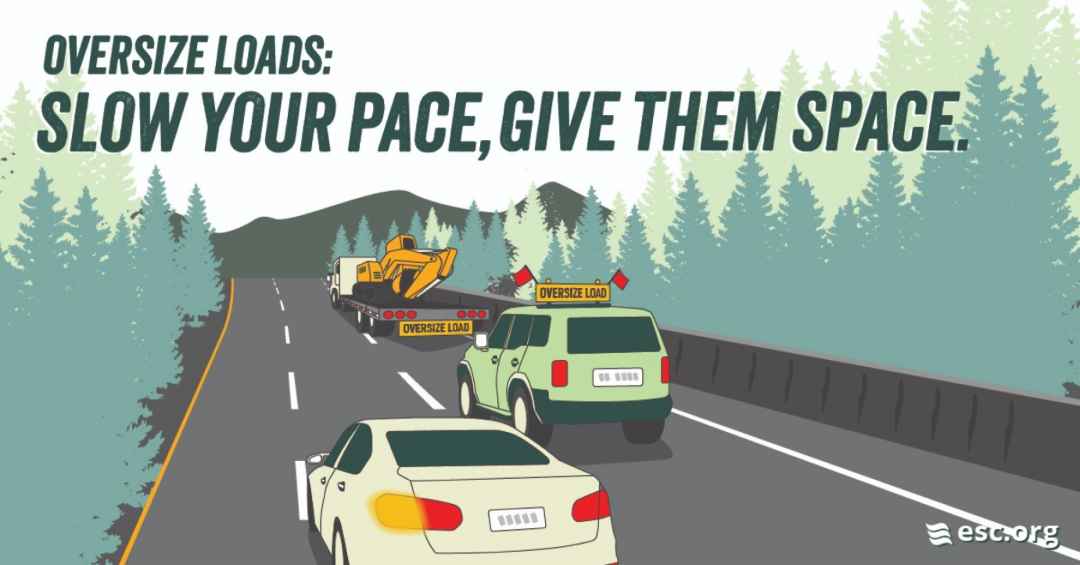
Beyond insurance coverage, workforce shortages, regulation differences and certification requirements, the pilot car industry faces another major challenge: the public. Many motorists don’t understand the work happening behind flashing amber lights or don’t give them the same respect as red and blue emergency lights. This lack of awareness creates safety risks for drivers and crews.
To address this, the industry has taken efforts to educate drivers through driver’s education, digital traffic signs and public awareness initiatives, such as the Evergreen Safety Council’s “Slow Your Pace, Give Them Space” campaign. The effort began in February and aims to reach the general public and learning drivers as early as possible.
“We hear frequently from people in the transport industry that most members of the motoring public don’t know what to do when they see an oversize load or pilot cars,” Kind said. “We want to help change that. The goal of our campaign is to spread the word to as many drivers as possible so when they encounter an oversize/overweight team on the road, they should ‘Slow Your Pace, Give Them Space.’ Our website contains videos, images and a one-page curriculum that are free to use and share, and we’re hoping that everyone will help amplify this important message. It’s all about keeping our pilots and load drivers as safe as possible.”
The Road Ahead
Pilot/escort car operations are a common sight on the road, yet they remain one of the least understood and regulated segments of heavy-haul transportation. Despite that, the industry plays an indispensable role in the safe and successful movement of many specialized transports.
The road ahead is not without challenges, but by embracing technology, working toward greater consistency in certification requirements and travel regulations, investing in training to address workforce shortages and educating the public about its role, the industry can continue to evolve.
As heavy hauls and superloads continue to grow in size and complexity, the pilot car industry will play an increasingly important role in shaping how safely and efficiently they move across North America.